Erik Günther · 26 September 2026
Wrenly Stargazers Track Rare Meteor Showers From Hilltop Observatories
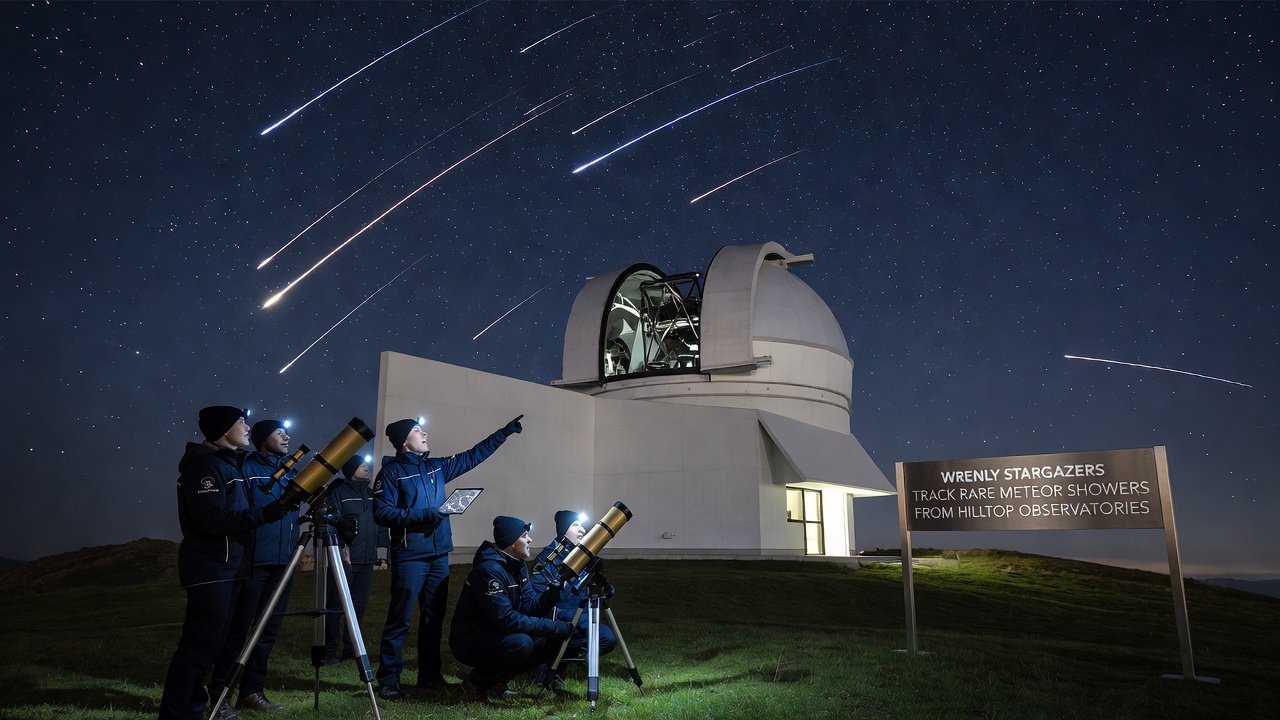
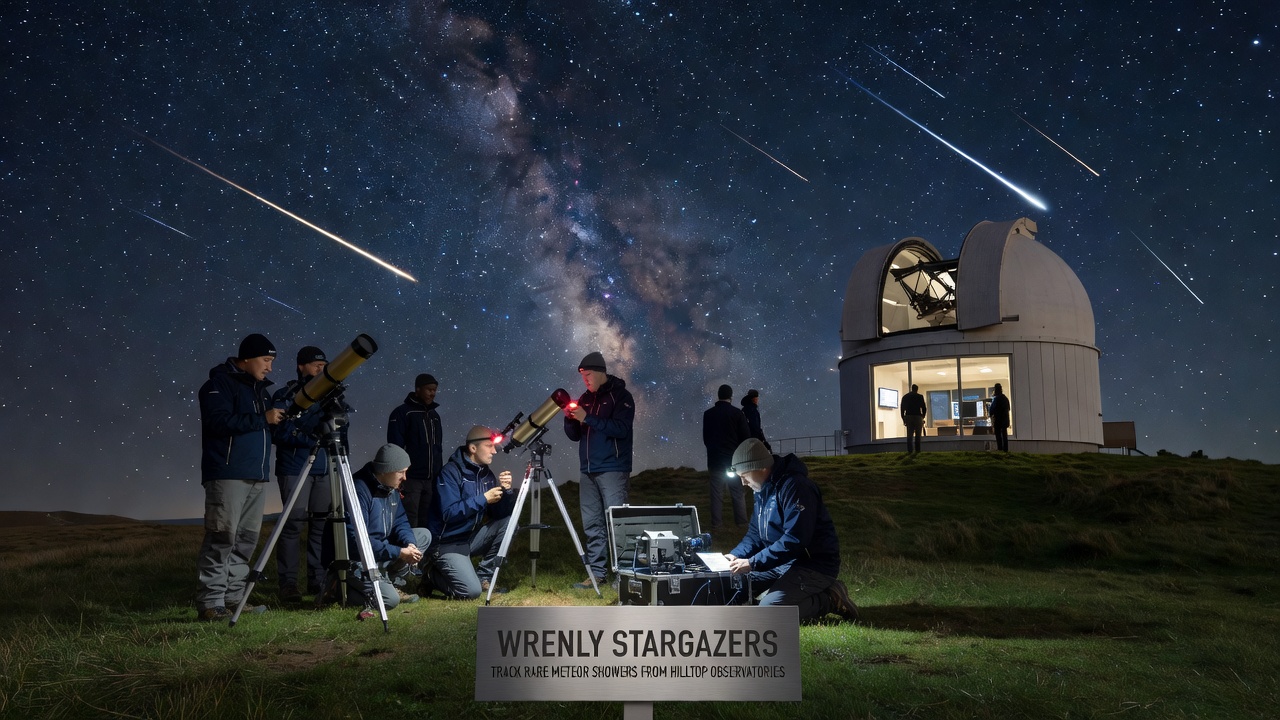
Groups of dedicated observers in Wrenly have established a network of hilltop sites equipped with specialized instruments that capture data during meteor events, and these locations provide elevated vantage points free from urban light interference while allowing continuous monitoring across multiple nights. Researchers coordinate schedules around predicted peaks, using digital cameras with wide-angle lenses alongside spectrographs that record atmospheric composition changes as particles enter at high velocities.
Observatory Setup and Equipment
Stations at elevations above 400 meters feature automated tracking mounts that adjust for Earth's rotation, and operators maintain backup power systems to handle extended sessions that can last through dawn hours. Data loggers collect timestamped images while radio receivers detect ionization trails that persist after visible streaks fade, creating layered records that combine optical and electromagnetic signals for later analysis.
Calibration routines run each evening to account for temperature shifts and humidity levels that affect lens clarity, whereas software algorithms filter out satellite passes and aircraft lights to isolate genuine meteor signatures. Teams cross-reference findings with orbital databases maintained by international agencies, ensuring that trajectories align with known comet debris paths rather than random space debris.
September 2026 Event Planning
Preparations intensify ahead of September 2026 when astronomers anticipate an elevated Perseid outburst tied to recent comet fragmentation, and forecasts from NASA indicate potential rates exceeding 150 meteors per hour during the peak window between September 12 and 14. Observers in Wrenly adjust their equipment for higher data throughput by installing additional wide-field arrays that capture fainter events near the horizon.
Coordination meetings review historical records from prior outbursts, and participants assign roles for real-time reporting that feeds into global networks. These efforts build on earlier campaigns where similar groups documented unusual color variations in meteors, suggesting variations in particle composition that warrant further spectral study.
Data Collection Methods
Each station logs precise entry angles and velocities while synchronized clocks ensure timestamps match across sites separated by several kilometers, allowing triangulation that determines altitude of burnout points with accuracy within tens of meters. Radio observers tune to specific frequencies where meteor echoes produce brief signal spikes, and these measurements supplement visual counts during cloudy intervals.
Processed datasets travel to central servers for aggregation, and analysts compare results against models from the European Space Agency that predict stream density based on past orbital perturbations. Discrepancies between observed and predicted numbers prompt adjustments to trajectory simulations, refining future forecasts for the broader community.
Community Involvement and Training
Local volunteers receive instruction on basic meteor identification and safety protocols for nighttime operations on exposed ridges, while experienced members demonstrate proper handling of sensitive detectors to avoid data corruption from static discharge. Sessions include practice runs that simulate peak activity so newcomers develop familiarity with rapid decision-making when multiple events occur simultaneously.
Schools in the region incorporate occasional field visits that expose students to the coordination required for sustained campaigns, and participants document their contributions through shared logs that track equipment performance over successive seasons. These records prove useful when troubleshooting issues such as dew formation on lenses during extended dew-point conditions.
Scientific Contributions
Findings from Wrenly sites have supplemented broader studies on atmospheric entry dynamics, and aggregated data helps refine estimates of mass influx rates that influence models of near-Earth object populations. Collaborations with university researchers allow access to advanced computational tools that process large image sets for statistical patterns in shower timing and brightness distribution.
Long-term monitoring reveals gradual shifts in radiant positions that correlate with planetary gravitational influences, and these observations align with predictions from orbital mechanics calculations performed at research institutions across multiple continents. Continued collection during September 2026 will add another layer to this growing archive.
Conclusion
Systematic tracking from Wrenly hilltops supplies consistent inputs to international meteor databases, and the combination of ground-based optics with radio detection creates comprehensive profiles of individual events. As preparations advance for the 2026 activity window, the established routines position these observers to contribute measurable data that supports ongoing refinement of shower prediction models.